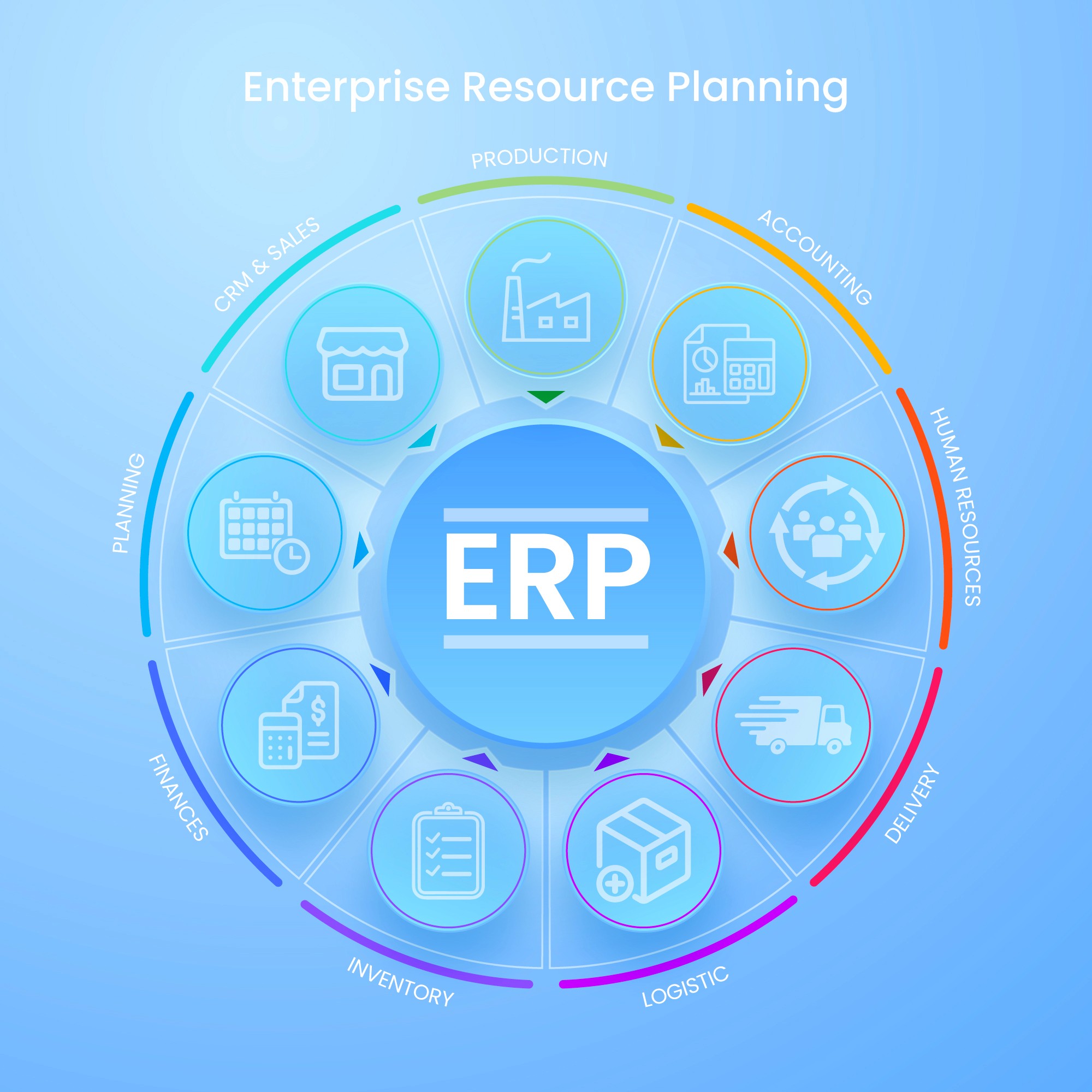
How Much Does ERP Implementation Cost? 2026 Pricing Guide
A concise guide clarifying the software, consulting, process, and integration components that affect ERP costs.
A concise guide clarifying the software, consulting, process, and integration components that affect ERP costs.
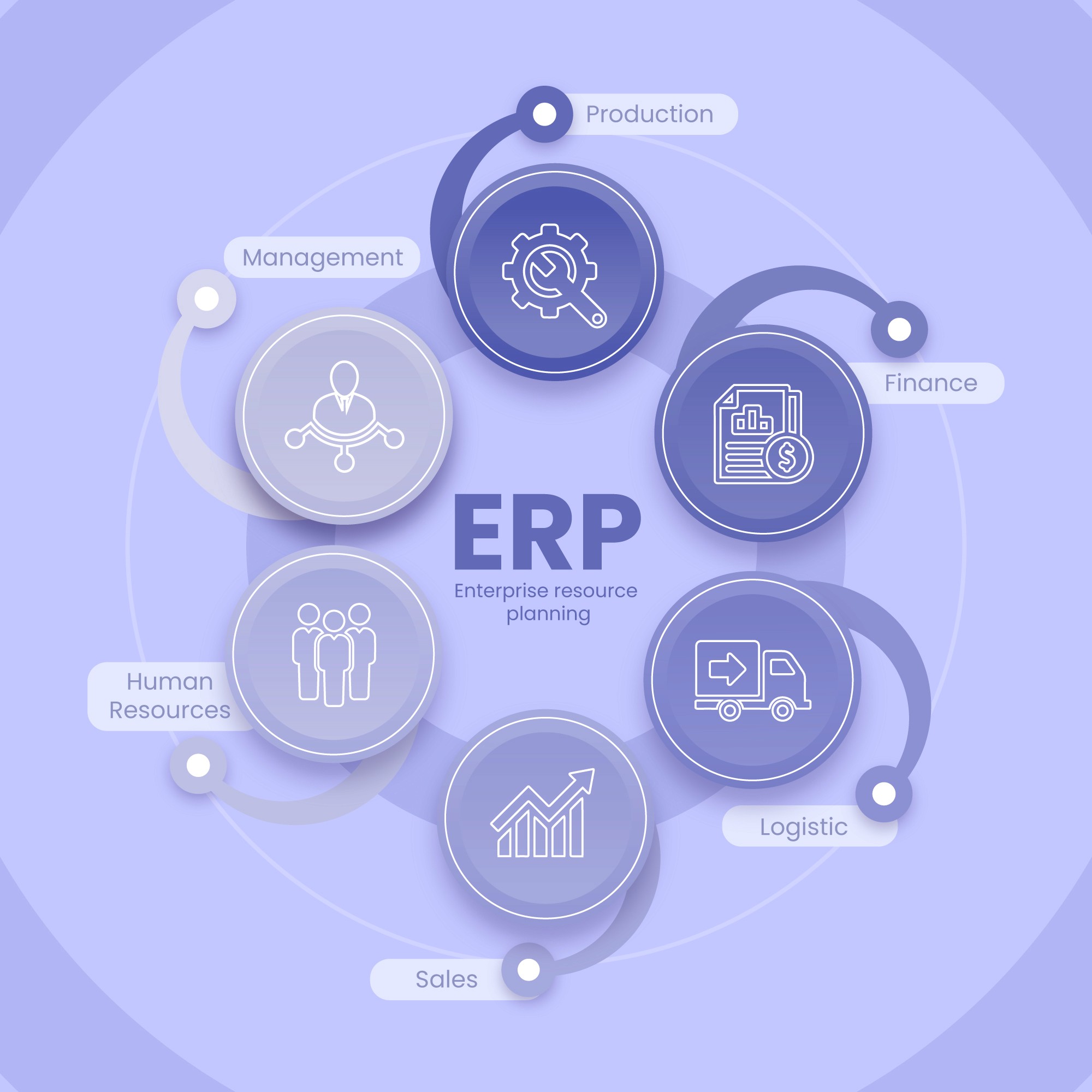
A small-scale ERP project, as of 2026, typically costs between [€10.000 and €100.000] in total cost of ownership. Roughly one-third of this amount is for software licenses, and two-thirds are for consulting, customization, integration, and training. The cost difference can be up to tenfold between a company with 10 users and a manufacturing plant with 100 users. As the number of users increases, license fees alone can exceed 80% of the total project budget. — That's why the honest answer to the question "How much does ERP cost?" isn't a number, but a calculation method. This guide provides that method step-by-step.
Author: Bugra — Has been providing ERP consulting and business analysis services for 6 years, managing SAP projects.
The cost of an ERP project consists of five main components. When comparing offers, you should look at these five items separately — single-line "turnkey" offers are often later-growing.
Software License.
There are two models: a one-time purchase (perpetual license) + annual maintenance, or a monthly subscription per user (cloud/SaaS). With a perpetual license, you pay a one-time fee per user [€2000 — €8000] + maintenance of approximately 15-20% of the license cost each year. In the subscription model, the [€100 — €400] per user per month is common. The total cost over 5 years is often similar; the difference lies in your cash flow preference.
Consulting and Customization.
This is the largest and most variable item in the project. Process analysis, system setup, customization according to your workflows, and deployment are all handled here. Industry practice is man-day pricing; ERP consulting man-day rates are in the [€200 — €1300] range. A simple trading company can go live with [20-40] man-days, while a facility with production planning may require [60-120] man-days.
Integrations.
This is the budget you need to allocate for e-invoice/e-delivery note integrators, bank integrations, e-commerce connections, and the integration of applications that exchange data with your custom software or solutions into your ERP system. Each simple integration costs between [€100-€500], while each complex integration costs between [€2000-€10000]. Clearly define your integration list during the proposal stage; any integration that is said to be "looked at later" will be looked at at twice the price later.
Training and Documentation.
5-10% of the total budget. The most attractive item to cut, but the most expensive to cut: untrained users misuse the system, incorrect data reports are invalidated, and the "ERP didn't work" story begins like this.
Hardware and Infrastructure.
If you are deploying in the cloud, the investment is almost zero; if you are deploying on your own server (on-premise), a one-time investment of [€15,000 - €40,000] is required for the server, backup, and security.
ERP | Small trading firm | Growing SMA | Production facility |
|---|---|---|---|
Number of users | 5-10 | 20-50 | 50-100+ |
Scope | Sales, inventory, finance | +CRM, warehouse, reporting | +Production planing, MRP, Quality |
Project Duration | 1-3 month | 3-6 month | 6-12 month |
Total Cost Range | 5.000 - 40.000 € | 20.000 - 250.000 € | 50.000 - 600.000 € |
Data migration.
Cleaning and transferring current, inventory, and open balance data from your old system (often Excel spreadsheets). The more disorganized your data, the bigger the bill — organizing your data before starting the project is the cheapest way to save money.
Scope expansion.
The phrase "we should add this" has a man-day equivalent. A good process analysis makes this cost visible from the start; budget overruns are the rule, not the exception, in projects that start without analysis.
Internal resource costs.
An ERP project is not just the consultant's job. Key users from your own team need to dedicate at least 10 hours a week to this project — if this time is not planned, the project will be prolonged, and a prolonged project will become more expensive.
Maintenance and version upgrades.
Going live is the beginning, not the end. Allocate an annual budget for annual maintenance, regulatory updates (such as e-transformation changes), and version upgrades.
Get a process analysis done first, then get a proposal. Offers received without knowing what you want are either inflated or incomplete; both will cost you dearly.
Proceed in phases. Instead of going live on day one, first launch the core modules (finance, sales, inventory), then the second phase 3-6 months later. Both the risk and the cash outflow will be spread out.
Stick to the standard. Every customization is both a development cost today and a maintenance cost tomorrow. Stretching your process by 20% is almost always cheaper than stretching the software by 80%.
Don't discard your existing systems. If you have a well-functioning tool, integrating it is often more economical than replacing it. (This is our default approach — we only recommend replacing a system when the cost of maintaining it exceeds the cost of replacing it.)
Cut back on scope, not training. If the budget is tight, postpone modules; don't cut back on training and documentation.
Conclusion: the right question isn't "how much does it cost," but "what does it cost?"
The real determinant of ERP cost isn't the software's price tag; The key is the clarity of your processes, the cleanliness of your data, and the right scope decision. The same software can be installed for [€20,000] with good analysis, or for [€50,000] without analysis.
The quickest way to find out your own cost is to have someone actually look at your processes. In our free process analysis, we examine your existing systems and workflows, and create a realistic cost range and priority list tailored specifically to you — with no commitment.
👉 [Book Your Free Process Analysis] (For English & Turkish for now)
Frequently Asked Questions
How long does ERP implementation take?
For small-scale projects, it takes 1-3 months; for medium-sized SME projects, 3-6 months; and for comprehensive projects involving production planning, 6-12 months. For multi-company holding structures, it takes 12-36 months. The most significant factors affecting the duration are data preparation and the time key users can dedicate to the project.
Is cloud ERP or on-site ERP more economical?
In the short term, cloud (lower initial cost) is better; however, the total cost over 5+ years varies depending on the scenario. Cloud is generally more sensible for companies with fewer than 20 users.
Is free or open-source ERP worthwhile?
Even if the license is free, the installation, customization, and support costs remain the same; in fact, the total cost can exceed that of commercial software because finding local support can be difficult. A "free" ERP is not free — it's unlicensed.
Do I have to change my existing programs?
Most of the time, no. Integrating your well-functioning systems with ERP is usually more economical and less risky than replacing them all.
Where does the biggest budget overrun come from?
Incomplete process analysis. Every need discovered mid-project adds to the cost, exceeding what was initially planned. Secondly, there's the issue of scattered data transfer.